 how-to
Sustainable Weight Loss After 50: A Practical Guide
Table of Contents
- Why Sustainable Weight Loss After 50 Differs From Earlier Years
- Weight Loss After 50 for Women: Navigating Menopause and Metabolism
- The Foundation: Strength Training for Weight Loss After 50
- Protein, Hydration, and Balanced Eating for Sustainable Results
- How to Maintain Weight Loss After 50: Long-Term Success Strategies
- Realistic Expectations: Timelines and Plateaus
- Making Weight Loss Sustainable in a Busy Life
- Frequently Asked Questions
Last Updated: October 14, 2026
Why Sustainable Weight Loss After 50 Differs From Earlier Years
Losing weight after 50 isn't the same game you played at 30. Your metabolism, hormones, and body composition have shifted, changing how you approach sustainable weight loss after 50.
The biggest difference is muscle loss. Starting around age 30, most people lose muscle naturally. After 50, that loss accelerates. Muscle burns calories at rest.
Hormonal changes compound the problem, especially for women navigating menopause: your body fights harder to hold onto fat, energy drops, and recovery takes longer.
The strategies that work aren't complicated. They're just different.
Weight Loss After 50 for Women: Navigating Menopause and Metabolism
Menopause Weight Loss: Understanding Hormonal Changes
Menopause doesn't cause weight gain directly, but its hormonal shifts make weight loss harder.
Progesterone decline slows metabolism slightly, and thyroid function can dip. The result: you might gain weight eating the same amount that maintained your weight five years ago.
You're not broken, your body is adapting. The fix is adjusting your approach to match your new reality.
Focus on three things during menopause weight loss:
- Eat more protein to preserve muscle
- Move more to maintain metabolism
- Sleep better to manage hunger hormones
Addressing these three factors makes menopause weight loss manageable, you're supporting your body instead of fighting it.
The Foundation: Strength Training for Weight Loss After 50
Strength training is the single most important tool for sustainable weight loss after 50, not cardio, not dieting.
Muscle is metabolically active, burning calories even at rest.
Strength training preserves muscle while you lose fat and builds new muscle, raising your baseline metabolism.
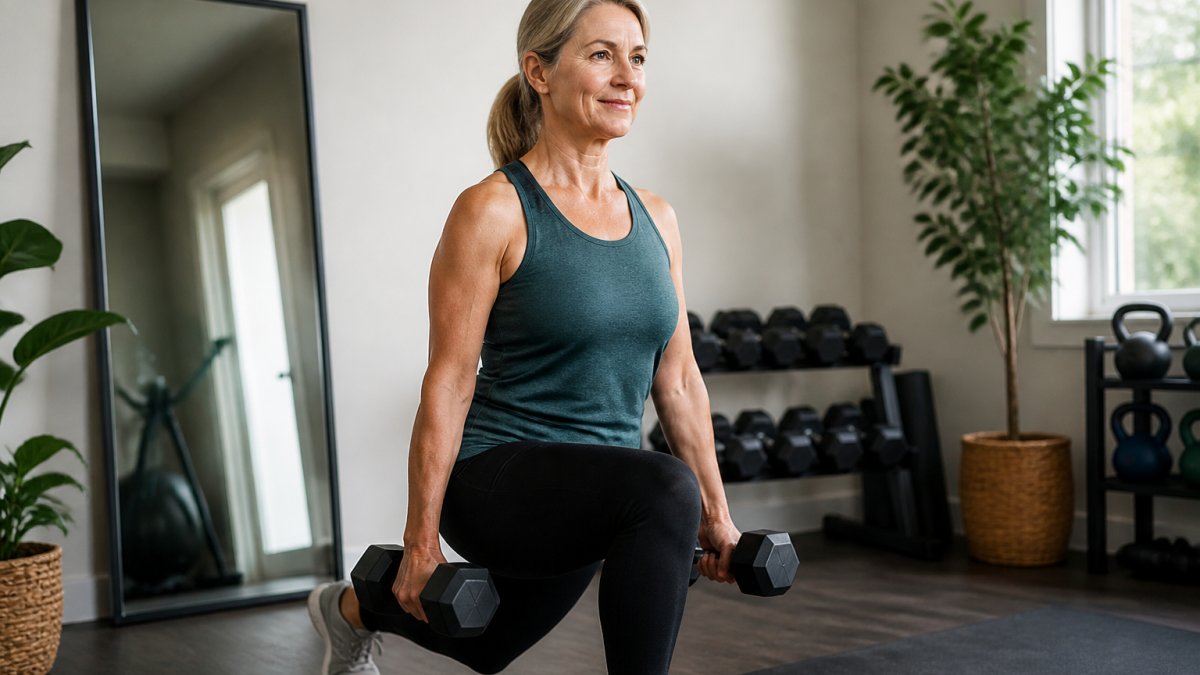
A Practical 8-Week Progressive Strength Plan for Beginners Over 50
Most articles tell you to lift weights but never show you how to start safely. Here is a week-by-week plan for beginners, including those with joint limitations.
Weeks 1-2: Foundation and Form
- 2 sessions per week, 20 minutes each
- Bodyweight only: sit-to-stands (use a sturdy chair), wall push-ups, assisted lunges holding a counter, glute bridges
- 2 sets of 8-10 reps per exercise, rest 60 seconds between sets
Weeks 3-4: Add Light Resistance
- 2-3 sessions per week, 25 minutes
- Add resistance bands or 2-5 lb dumbbells: band rows, dumbbell chest presses (lying on floor or bench), band bicep curls, lateral raises
- 2 sets of 10-12 reps
Weeks 5-6: Build Consistency
- 3 sessions per week, 30 minutes
- Increase to 3 sets of 10-12 reps
- Add: step-ups on a low step (4-6 inches), standing calf raises, seated overhead presses
Weeks 7-8: Progressive Overload
- 3 sessions per week, 30-35 minutes
- Increase weight by 5-10% if you can complete all reps with good form
- Add: farmer's carries (hold dumbbells and walk), dead bugs, modified planks (on knees or against wall)
Modifications for Joint Limitations
- Knee pain: replace lunges with sit-to-stands or leg extensions with light bands
- Shoulder pain: use resistance bands instead of dumbbells, limit overhead presses
- Back pain: avoid heavy squats; use glute bridges and bird-dog exercises
When to Consult a Clinician If you have osteoporosis, recent fractures, uncontrolled blood pressure, or are on blood thinners, get clearance first. A physical therapist can design a safe plan. Most practitioners find that even frail adults can strength train safely with proper supervision.
Balancing Strength Work With Low-Impact Cardio
Low-impact cardio protects your joints while keeping your heart healthy. Walking, swimming, cycling, and elliptical all count without stressing knees, hips, and ankles the way running does.
Aim for 150 minutes of moderate cardio weekly, 30 minutes five days a week, or smaller chunks like 15 minutes morning and evening (the WHO).
The balance that works best for sustainable weight loss after 50:
- 2-3 days strength training
- 3-4 days low-impact cardio
- 1-2 complete rest days
This combination preserves muscle, burns calories, and stays sustainable, a routine you can maintain, not a grind into exhaustion.
Protein, Hydration, and Balanced Eating for Sustainable Results
Protein at Every Meal: Building and Preserving Muscle
Protein is non-negotiable for weight loss after 50: your body needs it to preserve muscle while losing fat, and it keeps you fuller longer, reducing overeating.
A practical target: aim for 25-30 grams of protein at each meal. This doesn't mean complicated meal prep.
Increasing protein naturally crowds out empty calories, full on chicken and vegetables, you eat less bread and sweets.
Budget and culturally adaptable protein sources You don't need expensive supplements or grass-fed beef. Affordable options:
- Canned tuna or salmon (about $1-2 per can, 20-25g protein)
- Eggs (one of the cheapest protein sources, 6g each)
- Dried lentils and beans (about $1-2 per pound dry, 16-18g per cooked cup)
Hydration: The Overlooked Factor
Dehydration can masquerade as hunger, and aging weakens your thirst mechanism, so you may not feel thirsty even when your body needs water. Aim for 6-8 cups (48-64 oz) of fluid daily, more if active or in hot weather.
Water is best, but unsweetened tea, coffee, and water-rich foods (soup, watermelon, cucumber) count. A simple check: your urine should be pale yellow. Dark yellow means drink more.
Portion Awareness and Managing Cravings
Portion awareness isn't deprivation, it's eating the right amount for your body. Your portions at 50 are probably bigger than they need to be.
A practical approach:
- Use smaller plates (9-10 inches instead of 12 inches)
- Eat slowly, put your fork down between bites
- Stop when you're 80% full, not stuffed
Cravings happen. The goal isn't to never want sweets or salty snacks, it's to manage them without derailing your progress.
Strategies that work:
- Keep trigger foods out of the house
- Eat regular meals so you're not starving by afternoon
- Drink water when a craving hits, sometimes thirst feels like hunger
Cooking at home gives you control over portions and ingredients; restaurant and packaged foods are engineered to be easy to overeat.
When Medical Conditions and Medications Affect Weight
Some health conditions and prescriptions make weight loss harder, or easier. This is not a reason to give up; it's a reason to work with your doctor.
Conditions that can affect weight:
- Hypothyroidism slows metabolism. If you have it, ensure your medication dose is optimized.
- Type 2 diabetes and insulin resistance can make fat loss harder. A doctor or dietitian can help adjust your diet safely.
- Arthritis and chronic pain limit movement. Low-impact exercise and physical therapy can help.
Medications that can promote weight gain:
- Some antidepressants (especially older tricyclics and some SSRIs)
- Corticosteroids (prednisone)
- Beta-blockers for blood pressure
What to do: Never stop or change a prescription on your own. Ask your doctor or pharmacist if any medications have weight side effects and whether alternatives exist. A registered dietitian can tailor a plan around your conditions.
How to Maintain Weight Loss After 50: Long-Term Success Strategies
Measuring Progress Beyond the Scale
The scale doesn't tell the full story, you could lose fat while gaining muscle and see no change, which is why it alone discourages many people.
Better measurements of progress:
- How your clothes fit
- Your energy level
- Strength gains (lifting heavier weights)
Take progress photos every 4-6 weeks. Measure your waist. Notice when you can do more push-ups or carry groceries without fatigue.
Measuring progress beyond the scale keeps many people motivated through plateaus: the scale may stay the same while you build muscle and lose fat, but your body is changing.
Building Accountability and Community Support
Accountability isn't judgment, it's showing up consistently. People who share their goals with others are significantly more likely to achieve them.
Practical accountability options:
- Tell family or friends about your goals
- Join a group with similar goals
- Work with a coach or nutritionist
Community support matters because sustainable weight loss after 50 is a long journey and motivation fluctuates. When yours dips, community keeps you going.
When you're connected to people doing the same work, you stay consistent.
Realistic Expectations: Timelines and Plateaus
Sustainable weight loss after 50 typically happens at 1-2 pounds per week, slower than crash diets, but the pace that actually sticks.
Why slower is better:
- You preserve muscle
- You don't feel deprived
- Your metabolism doesn't crash
A realistic timeline: 6-12 months of consistent work for 50 pounds, 12-24 months for 100.
Plateaus happen: you might lose steadily for 6 weeks, see no change for 2, then drop 3 pounds suddenly.
When you hit a plateau:
- Don't cut calories drastically
- Add more strength training
- Check your portions, they often creep up
Most plateaus break on their own if you stay consistent; those who quit never see the progress on the other side.
Making Weight Loss Sustainable in a Busy Life
Meal Planning and Cooking at Home on Your Schedule
Meal planning removes the daily "what's for dinner" decision. Without a plan, you default to takeout, frozen meals, or whatever's easiest.
A simple meal plan for the week:
- Pick 2-3 proteins (chicken, fish, ground turkey)
- Pick 2-3 vegetables (broccoli, sweet potato, salad)
- Pick 1-2 carbs (rice, pasta, bread)
You don't need complicated recipes. Simple is sustainable. Grilled chicken with roasted vegetables and rice works. Repeat it.
Batch cooking saves time: a big batch of ground turkey covers tacos, spaghetti, or rice bowls, and a whole chicken works in salads, wraps, and soups.
Sleep, Stress, and Recovery as Weight Loss Factors
Sleep affects hunger hormones: poor sleep raises cortisol, driving fat storage especially in the belly.
Better sleep habits:
- Go to bed at the same time every night
- Keep your bedroom cool and dark
- Avoid screens 30-60 minutes before bed
Stress management matters because chronic stress keeps cortisol elevated, making weight loss harder and cravings stronger.
Stress-reduction practices that work:
- Walking (combines exercise and stress relief)
- Breathing exercises (5 minutes daily)
- Yoga or stretching
Recovery means rest days, your body changes during rest, not workouts.
Sustainable weight loss after 50 is achievable, not through perfection or extreme measures, but by understanding how your body works now and adjusting accordingly.
The guthealthfixed Feel Great system is built on these principles.
Frequently Asked Questions
How can I lose weight safely after 50?
Safe weight loss after 50 combines three core elements: strength training to preserve muscle mass, adequate protein intake at every meal, and a moderate calorie deficit built on whole foods rather than restriction. Aim for 0.5-1 pound per week. Include low-impact cardio like walking or swimming to protect joints, stay hydrated, and prioritize sleep and stress management. If you take medications or have existing health conditions, work with your doctor to ensure your approach complements your treatment plan.
What is the best type of exercise for sustainable weight loss after 50?
Strength training is the most effective exercise for weight loss after 50 because it preserves muscle mass and boosts metabolism. Pair resistance work (2-3 times per week) with low-impact cardio like walking, swimming, or cycling to support cardiovascular health without stressing joints. Progressive resistance exercises that target major muscle groups deliver the best results. Consistency matters more than intensity, a sustainable routine you can maintain long-term beats sporadic intense workouts.
How does menopause affect weight loss after 50?
Menopause triggers hormonal shifts that slow metabolism, reduce muscle-building capacity, and increase fat storage around the midsection. Estrogen decline makes weight loss harder and weight regain easier. However, menopause weight loss is entirely achievable with targeted nutrition and strength training. Prioritize protein to counter muscle loss, focus on resistance exercise to offset metabolic slowdown, and manage stress and sleep, both of which influence hormones and cravings. Many women find success by adjusting expectations and timelines rather than changing their core strategy.
What foods help support sustainable weight loss after 50?
Focus on whole foods: lean proteins (fish, poultry, legumes), vegetables, whole grains, and healthy fats. Protein at every meal stabilizes blood sugar, reduces cravings, and supports muscle preservation, critical for weight loss after 50. Home-cooked meals give you control over portions and ingredients. Include hydration as part of your daily routine, water supports hunger cues and metabolic function. Limit processed foods and added sugars, which spike blood sugar and trigger energy crashes. Budget-friendly options like eggs, canned fish, frozen vegetables, and beans work just as well as expensive alternatives.