 how-to
Science Behind Fibre Matrix Drinks: How They Work
Table of Contents
- What Is a Fibre Matrix Drink and How Does It Work
- Fibre Drinks and Blood Sugar: The Mechanism Explained
- Daily Fibre Drink Safety: What You Need to Know
- How Long Do Fibre Drinks Take to Work
- Fibre Supplements and Medication Timing: Practical Guidelines
- Evaluating a Fibre Drink Label: What to Look For
- Real Results: How Fibre Matrix Drinks Fit Into a Metabolic Health System
- Frequently Asked Questions
Last Updated: October 21, 2026
What Is a Fibre Matrix Drink and How Does It Work
A fibre matrix drink is a beverage formulated with soluble and insoluble fibres that creates a thick, viscous consistency, slowing carbohydrate absorption and regulating blood sugar.
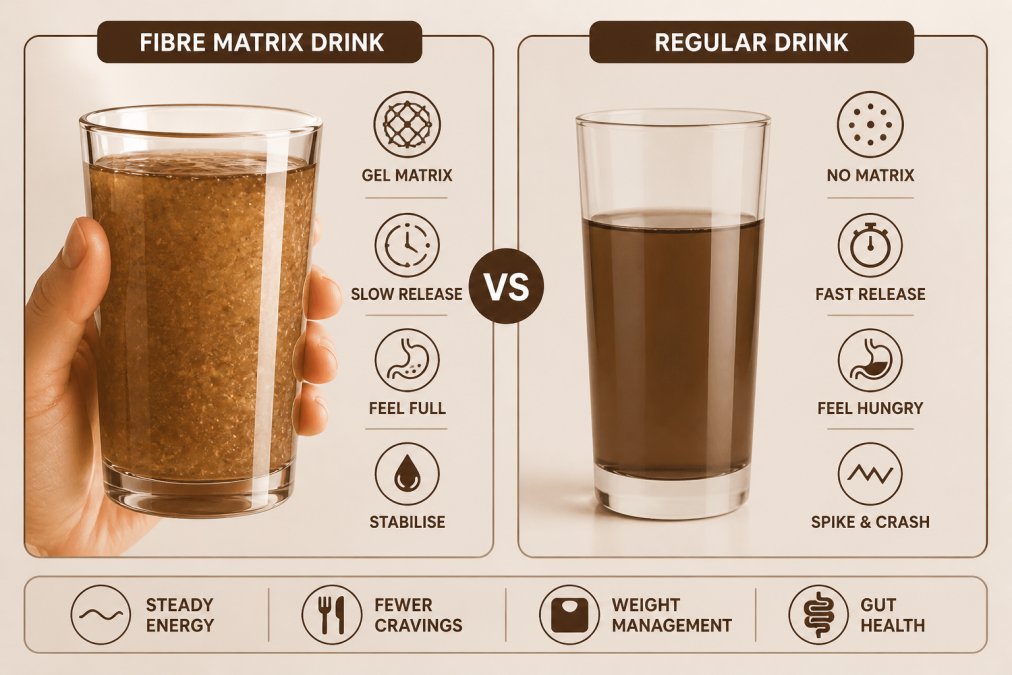
Soluble fibre absorbs water and forms a gel in your stomach, trapping carbohydrates and slowing their release so blood sugar rises gradually instead of spiking.
Understanding soluble and insoluble fibre
Soluble fibre dissolves in water and creates that gel-like texture.
Insoluble fibre doesn't dissolve in water; it passes through largely unchanged, supporting bowel regularity. Most fibre matrix drinks include both types.
The balance matters: a well-designed drink contains enough soluble fibre for viscosity plus insoluble fibre for digestive health.
The gel formation process
When soluble fibre meets water in your stomach, it hydrates and thickens, the gel formation process. That viscosity slows carbohydrate absorption.
Carbohydrates normally rush into your bloodstream; the gel acts as a physical barrier, releasing them slowly and preventing the sharp post-meal spike.
The thickness you feel isn't just texture, it's the mechanism working. The thicker the drink, the more effectively it slows absorption.
Fibre Drinks and Blood Sugar: The Mechanism Explained
Fibre matrix drinks reduce post-meal glucose spikes by physically slowing carbohydrate absorption in your small intestine.
How viscous fibre slows carbohydrate absorption
Without fibre, carbohydrates break down quickly into glucose, your pancreas releases insulin to handle the surge, and repeated spiking stresses your metabolic system.
Viscous fibre changes this pattern:
- The gel coating slows how fast carbohydrates move through your digestive tract
- Your small intestine absorbs glucose more gradually
- Your pancreas releases insulin in smaller, more measured doses
People may experience steadier energy when they drink a fibre matrix drink before meals, potentially avoiding the spike-and-crash cycle.
The practical benefit may include fewer cravings, better focus, and reduced fatigue, as stable blood sugar can help manage hunger signals that drive snacking.
Post-meal glucose response and blood sugar regulation
Post-meal glucose response is how high your blood sugar climbs after eating and how quickly it returns to baseline.
Here's what happens:
- Without fibre: blood sugar spikes 30-60 minutes after eating, then crashes
- With a fibre matrix drink: blood sugar rises gradually, peaks lower, and stays more stable
This flattened response is the core mechanism for long-term blood sugar regulation: consistently flattening post-meal spikes supports natural insulin sensitivity over time.
Many people tracking glucose with continuous monitors may observe a difference in their post-meal glucose response.
Daily Fibre Drink Safety: What You Need to Know
Fibre matrix drinks are generally safe for most adults but require proper use. Bloating or digestive discomfort usually happens when people don't drink enough water or increase fibre too quickly.
Hydration and side-effect management
Soluble fibre absorbs water: drink too little and you'll feel bloated or constipated; drink plenty and you'll feel fine.
The basic rule: drink at least 8 ounces of water with your fibre matrix drink, then keep drinking throughout the day, most people need 8-10 glasses daily when using one regularly.
Common side effects and how to prevent them:
- Bloating: increase water intake, reduce fibre dose temporarily, or spread doses throughout the day
- Constipation: drink more water, eat whole foods with natural fibre, and move your body
- Gas or digestive discomfort: start with a smaller dose and gradually increase over 1-2 weeks
Your digestive system adapts. Most people stop experiencing side effects within 7-10 days if they're drinking enough water.
Who should use caution
Certain groups should talk to their doctor before starting a fibre matrix drink:
- People taking medications that need to be absorbed at a specific rate (some blood pressure meds, thyroid medications)
- Anyone with a history of bowel obstruction or severe digestive issues
- People with swallowing difficulties
The concern isn't danger but that timing and dosing need professional guidance. A doctor can advise whether a fibre matrix drink suits your situation and when to take it relative to medications.
How Long Do Fibre Drinks Take to Work
"How long until it works" depends on which effect you mean. A fibre matrix drink operates on three timelines: the immediate meal-level glucose effect, digestive adaptation, and longer-term metabolic changes from consistent use.
The meal-level effect: minutes to hours
The viscosity mechanism acts within the same meal: soluble fibre forms a gel in the stomach, slowing gastric emptying and carbohydrate movement into the small intestine. Studies on psyllium and guar gum typically measure a blunted post-meal glucose curve within one to two hours (pubmed.ncbi.nlm.nih.gov).
Digestive adaptation: roughly one to two weeks
Gas, bloating, and bowel changes are the most common early complaints when increasing fibre. Symptoms typically peak in the first few days and settle over one to two weeks if the dose rises gradually and fluid intake is adequate. Start with a partial serving; if symptoms persist beyond a couple of weeks or are severe, reduce the dose or consult a clinician.
Blood sugar and appetite: days to weeks
Because the meal-level effect is immediate, some people notice steadier energy or fewer cravings within days. But meaningful outcomes, improved fasting glucose, reduced glycemic variability, appetite regulation, depend on consistency across many meals. Allow two to four weeks of regular use before judging whether the product helps your pattern, and longer for weight or medication changes influenced by many factors beyond fibre.
What changes the timeline
Several variables shift how quickly and how strongly a fibre drink works:
- Fibre type and dose: highly viscous fibres such as psyllium and konjac glucomannan tend to produce a clearer gel effect at lower doses than less viscous fibres. A drink with a small soluble fraction may never produce a noticeable meal-level effect.
- Meal composition: a high-carbohydrate, low-fibre meal gives the drink more to work against; a meal that already contains whole-food fibre may show a smaller incremental benefit.
- Timing: taking the drink before or with a meal is different from taking it hours later. The gel needs to be present when the carbohydrate arrives.
The evidence caveat
Most onset evidence comes from studies of specific fibres, psyllium, guar gum, beta-glucan, konjac, in controlled meals, not trials of a particular commercial fibre matrix drink. Applying those findings requires knowing a product's fibre type and dose; a drink that doesn't disclose its soluble fibre content, or uses a low-viscosity fibre, may not follow the same timeline.
Fibre Supplements and Medication Timing: Practical Guidelines
The simple rule: take medications at least 1-2 hours before or after your fibre matrix drink.
If you're on medications for blood sugar, blood pressure, or cholesterol, ask your doctor or pharmacist about specific timing for your prescriptions.
Some take medications first thing in the morning and have their fibre drink mid-morning or with lunch; others reverse it.
Evaluating a Fibre Drink Label: What to Look For
Most fibre matrix drinks are sold with bold claims about blood sugar, cravings, and metabolic health. The label separates formula from marketing. Read it by working through five questions: how much fibre, what kind, what else is in the serving, how big is the serving, and what the manufacturer actually claims.
1. Start with total fibre, then break it down
The Nutrition Facts panel lists total fibre per serving, but that number tells you little because insoluble and soluble fibre do different jobs. For the gel-forming, carbohydrate-slowing effect, you need the soluble fibre content specifically, many labels bury that split in the ingredient list. A drink listing 8 g total fibre but made mostly of cellulose or wheat bran may have a small viscous fraction.
2. Identify the fibre sources by name
Note which fibres appear in the ingredient list. Common soluble, gel-forming options include psyllium husk, guar gum, acacia gum, pectin, beta-glucan (from oats or barley), and konjac glucomannan; common insoluble options include cellulose, wheat bran, and resistant starch. Each has a different viscosity profile and evidence base, psyllium has been studied extensively for laxation and cholesterol, and beta-glucan carries authorized health claims in some jurisdictions.
3. Check what else is in the serving
Fibre drinks often carry added sugars, sugar alcohols, or non-nutritive sweeteners to make a thick, gritty liquid palatable. Scan for:
- Added sugars: anything ending in "-ose" (sucrose, fructose, dextrose) or listed as cane sugar, honey, or fruit juice concentrate. The goal is fibre, not a sugar-sweetened beverage.
- Sugar alcohols: sorbitol, maltitol, and xylitol can cause gas and a laxative effect, especially in sensitive guts. Erythritol is lower-risk for most people but still worth noting.
- Non-nutritive sweeteners: stevia, monk fruit, sucralose, and aspartame are common. Tolerance varies; some people report bloating or GI discomfort with certain options.
4. Watch the serving size and preparation
A label can look impressive per serving while the realistic serving is small or the powder is meant to be mixed into a large volume. Check:
- Grams per scoop and scoops per container, so you know the true cost and dose.
- Recommended liquid volume. Viscous fibres need enough water to hydrate fully; a label that says "mix with 4 oz" may be setting you up for bloating.
- Timing instructions, if any. Some products advise taking with meals; others are vague. Vague timing is a sign the manufacturer is not making a specific mechanistic claim.
5. Read the claims critically
Separate structure/function claims ("supports digestive health," "helps maintain healthy blood sugar") from disease claims ("lowers blood sugar," "treats diabetes"). The latter require regulatory authorization and are rarely allowed on a supplement label, treat any implied disease treatment as a red flag. Also note whether the product carries a supplement facts panel versus a nutrition facts panel, since the regulatory category affects permitted claims and ingredient listing.
A note on product-specific evidence
General fibre research is extensive, but evidence on any single commercial fibre matrix drink is usually limited to the manufacturer's own studies, if any. Ask whether the brand cites independent research on its specific formula or only on fibre generally, the gap between the two is where most marketing claims live.
Real Results: How Fibre Matrix Drinks Fit Into a Metabolic Health System
A fibre matrix drink works best as part of a complete metabolic health approach, not a standalone fix.
The drink is a tool: it stabilizes blood sugar and reduces cravings, making it easier to stick to clean eating and avoid processed foods.
The real power isn't the drink itself but how it supports consistent, healthy choices.
A fibre matrix drink is a practical tool for stabilizing blood sugar and supporting metabolic health, but it works best combined with whole foods, consistent movement, and adequate hydration. At guthealthfixed, we position the fibre matrix drink as one component of the Feel Great system, a comprehensive approach that includes yerba maté tea, clean nutrition, and lifestyle consistency.
Frequently Asked Questions
What is a fibre matrix drink?
A fibre matrix drink is a beverage blend designed to deliver soluble fibre in a viscous, gel-forming format. When mixed with water, the fibre creates a thick consistency that slows carbohydrate absorption and helps regulate blood sugar levels. The matrix structure, the way fibres are combined and dispersed, determines how effectively the drink forms a gel in your stomach and slows digestion. This differs from standard fibre supplements because the drink format allows the fibre to interact with food as it moves through your digestive system, creating the gel formation that traps carbohydrates and slows their entry into the bloodstream.
Are fibre matrix drinks safe for people with diabetes?
Fibre matrix drinks can be beneficial for people managing type 2 diabetes, as they help slow post-meal glucose spikes and support blood sugar regulation. However, safety depends on how they're used alongside existing medications. If you take diabetes medications like insulin or sulfonylureas, the blood sugar-lowering effect of fibre drinks may require medication adjustments, this is why timing matters and why your doctor should be involved. Start with the recommended serving size, stay hydrated, and monitor your blood sugar response. Fibre supplements and medication timing should be separated by at least 2 hours to prevent interactions that reduce medication effectiveness.
How long do fibre drinks take to work?
You may notice improved fullness and reduced appetite within the first dose or two, as the gel formation creates bulk in your stomach. However, longer-term benefits, such as sustained improvements in A1c levels, cholesterol, and digestive health, develop over weeks to months. The timeline varies based on your starting fibre intake, diet quality, and individual metabolism. Consistency matters more than immediate results.
Is it okay to drink fibre drinks every day?
Daily fibre drink use is safe for most adults when you follow recommended intake guidelines and stay properly hydrated. The typical recommendation is one serving per day, though some people benefit from two servings if spaced apart. Daily use allows your digestive system to adapt, reducing side effects like bloating or gas that sometimes occur with initial use. However, daily fibre drink safety depends on adequate water intake, aim for at least 8 glasses daily, and spacing doses at least 4-6 hours apart if taking multiple servings. If you experience persistent digestive discomfort, reduce frequency or consult a healthcare provider.